

Going where no doctor would go
“Christian doctors have so much love and can minister not only to physical needs, but also to spiritual needs.”
By Charissa Thompson (Milligan, ’08)
Imagine living in a place where the day is considered special if the electricity is on and the fear of being kidnapped by local guerrilla groups is always present. Helen Uriah, a brave and driven young woman, is a Milligan alumna (‘96) who has worked in such circumstances.
The daughter of indigenous missionaries to the Hindu people of rural Jowai, India, Helen was blessed to be raised in a Christian home. At an early age, God placed a calling in her heart to become a doctor. She wanted to minister to her compatriots, many of whom suffered from illnesses stemming from unclean water and poor hygiene.
When she was a child, no doctor was willing to travel to Helen’s town. Out of necessity, her mother took on the role of physician, though she had no formal medical training. It was through this experience that Helen’s dream was born.
“I wanted to work in an area where no doctor would go.”
Helen determined that she would attend Milligan College after hearing about the school from other missionaries. Despite language, cultural, financial and geographical barriers, she found herself pursuing a bachelor’s degree in eastern Tennessee.
Never losing sight of her dream, Helen majored in biology and minored in chemistry at Milligan. Though her studies were challenging, she says her professors encouraged and supported her.
“The faculty had the same love for the Lord [I had] and had missions on their minds. My professors were instrumental in keeping my goal alive.”
Following graduation Helen attended medical school in Nepal, a country bordering India. She completed her five and a half year training serving in internships in a Nepalese government hospital and at a leprosy mission’s hospital.
At the government hospital, Helen practiced alongside Hindu doctors.
“Seeing the doctors in that hospital made me so anxious to be on the field and winning souls to the Lord. Christian doctors have so much love and can minister not only to physical needs, but also to spiritual needs.”
Helen’s first official job as a practicing doctor was at a Welsh Presbyterian missionary hospital, where she served for one year. However, because she was practicing in a large town and not in the rural, remote places to which she felt called, she looked for a job elsewhere.
She decided to interview for a government healthcare position. The Nepalese government provides free healthcare to all citizens, and it determines where doctors will be placed within the country.
The Lord knew Helen’s heart and her dream, and four months after her interview, she was hired and sent to a primary health care center located in an area where no other doctor wanted to go.
Positioned in a disputed boundary area where kidnappings were frequent, Helen’s work was dangerous. The small village had no roads, no phones, unsafe drinking water and intermittent electricity.
The government told Helen she would not last one month. She stayed for fourteen. This was the exact setting she had always dreamed of serving in, both medically and as a Christian witness.
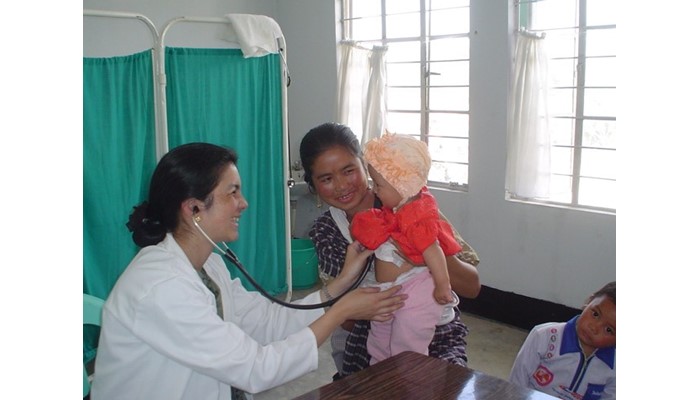
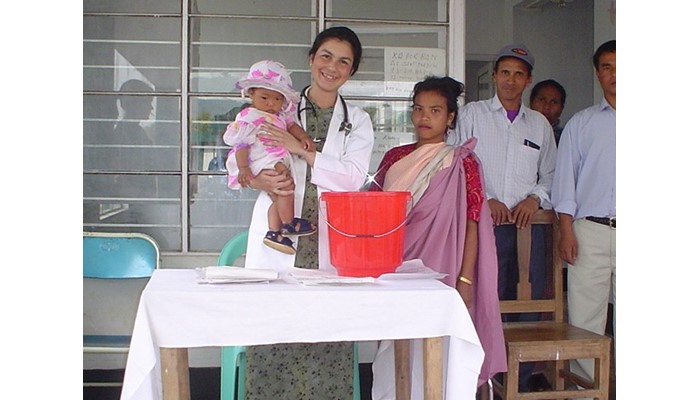
She treated patients suffering from skin infections, respiratory infections, malaria and gastrointestinal infections caused by waterborne bacteria. Some patients walked two hours to see her.
“I was exactly where God wanted me. The outpatient load I served was unbelievable. I learned so much about trusting God through that medical experience. I’ve seen cases that I was told were not medically possible. I’ve witnessed mothers delivering babies in extremely horrible conditions where both should have died, yet somehow-and not because of medical science-they both survive.”
“When I’m talking to patients, and especially to non-Christians, I tell them that 80% is God and only 20% is my input and diagnosis.”
After serving in the village for more than a year, government officials transferred Helen to a larger community health center. The center, located in a town accessible by roads, has a large staff and even has an ambulance, though it is rarely used. Helen is still practicing in the community care center today. She treats over 150 patients a day and works long, exhausting hours. However, she is overjoyed in her work because God has placed her there.
As a little girl, Helen heard God’s call to serve the poor and sick of India, and she is following that call for her life today.
“God’s call for us is to listen to what He’s trying to tell us. I never thought I would use a government job to witness, but now I’m very convicted to be Christ’s witness at this job. Everywhere we are is the mission field.”
“Christian doctors have so much love and can minister not only to physical needs, but also to spiritual needs.”
By Charissa Thompson (Milligan, ’08)
Imagine living in a place where the day is considered special if the electricity is on and the fear of being kidnapped by local guerrilla groups is always present. Helen Uriah, a brave and driven young woman, is a Milligan alumna (‘96) who has worked in such circumstances.
The daughter of indigenous missionaries to the Hindu people of rural Jowai, India, Helen was blessed to be raised in a Christian home. At an early age, God placed a calling in her heart to become a doctor. She wanted to minister to her compatriots, many of whom suffered from illnesses stemming from unclean water and poor hygiene.
When she was a child, no doctor was willing to travel to Helen’s town. Out of necessity, her mother took on the role of physician, though she had no formal medical training. It was through this experience that Helen’s dream was born.
“I wanted to work in an area where no doctor would go.”
Helen determined that she would attend Milligan College after hearing about the school from other missionaries. Despite language, cultural, financial and geographical barriers, she found herself pursuing a bachelor’s degree in eastern Tennessee.
Never losing sight of her dream, Helen majored in biology and minored in chemistry at Milligan. Though her studies were challenging, she says her professors encouraged and supported her.
“The faculty had the same love for the Lord [I had] and had missions on their minds. My professors were instrumental in keeping my goal alive.”
Following graduation Helen attended medical school in Nepal, a country bordering India. She completed her five and a half year training serving in internships in a Nepalese government hospital and at a leprosy mission’s hospital.
At the government hospital, Helen practiced alongside Hindu doctors.
“Seeing the doctors in that hospital made me so anxious to be on the field and winning souls to the Lord. Christian doctors have so much love and can minister not only to physical needs, but also to spiritual needs.”
Helen’s first official job as a practicing doctor was at a Welsh Presbyterian missionary hospital, where she served for one year. However, because she was practicing in a large town and not in the rural, remote places to which she felt called, she looked for a job elsewhere.
She decided to interview for a government healthcare position. The Nepalese government provides free healthcare to all citizens, and it determines where doctors will be placed within the country.
The Lord knew Helen’s heart and her dream, and four months after her interview, she was hired and sent to a primary health care center located in an area where no other doctor wanted to go.
Positioned in a disputed boundary area where kidnappings were frequent, Helen’s work was dangerous. The small village had no roads, no phones, unsafe drinking water and intermittent electricity.
The government told Helen she would not last one month. She stayed for fourteen. This was the exact setting she had always dreamed of serving in, both medically and as a Christian witness.
She treated patients suffering from skin infections, respiratory infections, malaria and gastrointestinal infections caused by waterborne bacteria. Some patients walked two hours to see her.
“I was exactly where God wanted me. The outpatient load I served was unbelievable. I learned so much about trusting God through that medical experience. I’ve seen cases that I was told were not medically possible. I’ve witnessed mothers delivering babies in extremely horrible conditions where both should have died, yet somehow-and not because of medical science-they both survive.”
“When I’m talking to patients, and especially to non-Christians, I tell them that 80% is God and only 20% is my input and diagnosis.”
After serving in the village for more than a year, government officials transferred Helen to a larger community health center. The center, located in a town accessible by roads, has a large staff and even has an ambulance, though it is rarely used. Helen is still practicing in the community care center today. She treats over 150 patients a day and works long, exhausting hours. However, she is overjoyed in her work because God has placed her there.
As a little girl, Helen heard God’s call to serve the poor and sick of India, and she is following that call for her life today.
“God’s call for us is to listen to what He’s trying to tell us. I never thought I would use a government job to witness, but now I’m very convicted to be Christ’s witness at this job. Everywhere we are is the mission field.”